
Which boat motor is better - gas or electric? A practical comparison
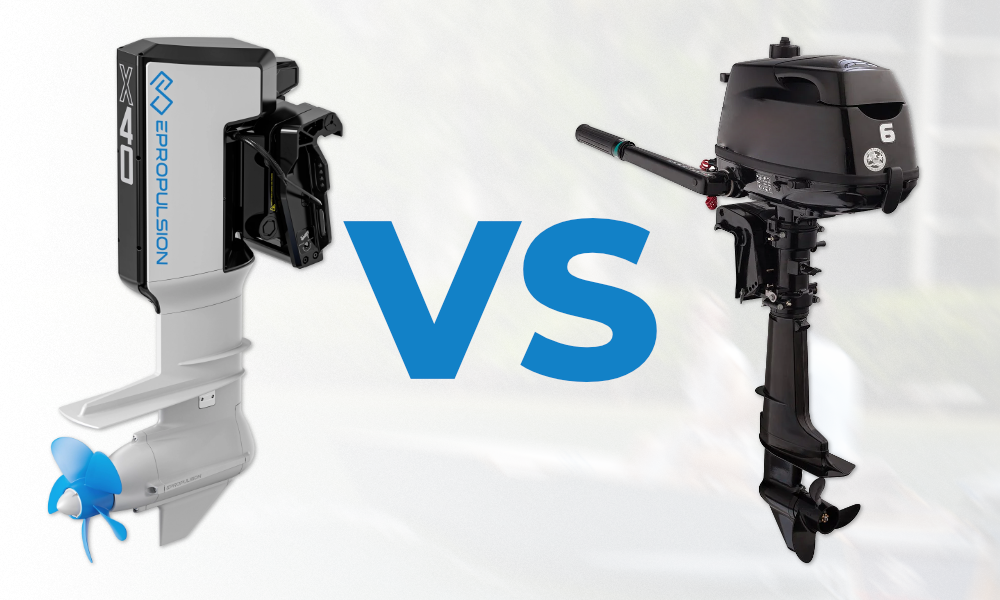
Buying a boat is emotional. But choosing an engine is a purely practical decision.
More and more people are asking today: should I choose a traditional combustion engine or a modern electric drive?
In this article, we will compare electric outboard motors with traditional combustion engines in detail, analyzing their construction, operation, running costs, and the key differences that matter when choosing the right propulsion for your boat.
Globtechnic – Authorized ePropulsion Distributor
Drawing on experience with ePropulsion electric systems — in particular the X Series, I Series, and POD eSSA systems — let's compare both solutions in a way that truly matters to a future boat owner.

Does an electric motor have enough power compared to a combustion engine?
This is the first question most customers ask.
In practice, a modern electric drive:
- delivers maximum torque from the very first rotation
- responds instantly to throttle input
- accelerates linearly and predictably
In a combustion engine, power builds as revs increase. In an electric motor, full torque is available from the start. The result? Excellent responsiveness during port maneuvers, pulling away, or getting up on plane.
In normal recreational use, most people won't feel any "lack of power." The difference is more in the power delivery characteristics than in actual drive force.
Is an electric motor cheaper to maintain than a combustion engine?
This is the topic that often determines the choice.
A combustion engine generates costs for:
- fuel
- periodic servicing
- oil, filter, and spark plug replacement
- cooling system components
- winter storage servicing
Electric drive eliminates:
- oil changes
- fuel system
- exhaust system
- many mechanical components
96V systems (such as eSSA in the X , I and POD series) are mechanically simpler in construction. This translates to lower risk of failure and reduced running costs over the long term.
For recreational use, the difference in annual costs can be significant.
Does an electric motor have sufficient range?
This is one of the most commonly searched questions on Google: "how far can a boat travel on an electric motor?"
The answer is: it depends on your boating style and system configuration, but for recreational use, the range is fully predictable and generally more than adequate.
What does "sufficient range" mean?
In practice, most boat owners:
- go out for 1–4 hours per day,
- travel between the marina and their mooring spot,
- use the boat recreationally, not for expeditions,
- return to their starting point the same day.
Electric motors in 96V systems (X Series, I Series, and POD eSSA) are designed precisely for these scenarios. They are not built for multi-day passages without access to charging infrastructure, but for comfortable, predictable recreational use.
What does range actually depend on?
Range is not a fixed value — it depends on:
- speed (the biggest factor),
- boat weight,
- weather conditions,
- battery capacity,
- how you operate the throttle.
At an economical pace, runtime can be several times longer than at full speed. It works exactly like a car — energy consumption rises exponentially with speed.
The difference is that with an electric system, you have full control and real-time visibility of energy consumption. You can see:
- current power consumption,
- estimated remaining runtime,
- battery state of charge.
This eliminates the guesswork that often comes with fuel-powered engines.
Can you extend the range?
Yes — in several ways.
- Choosing a higher battery capacity — the 96V system allows you to scale energy storage according to your needs.
- Installing a solar system — for recreational boats, houseboats, or displacement vessels, photovoltaic panels can meaningfully support the energy balance and extend time on the water without needing to charge from shore.
- Optimizing your boating style — energy consumption drops significantly in economy mode.
In practice, many recreational vessels with a solar setup can significantly reduce the need for frequent charging during relaxed use.
Is an electric motor suitable for long-distance cruising?
If you're planning multi-hour passages at full speed with no access to charging — a combustion engine still offers greater logistical freedom.
However, if your use involves:
- recreational boating,
- weekend trips,
- traveling between locations,
- port maneuvering,
- day charters,
then an electric system provides fully functional and predictable range.
Is an electric motor really quiet?
Yes, and it's one of the greatest advantages of electric drives.
See the difference for yourself:
Noise level comparison: electric boat vs combustion engine boat
No exhaust noise
No engine vibration
No fuel smell
You can hold a normal conversation on board. The trip becomes calmer and more comfortable.
For families with children, recreational boaters, or leisure boat owners, this is an enormous benefit.
Is an electric motor more modern and easier to operate?
96V electric systems work as an integrated ecosystem:
- smart displays,
- digital controls,
- performance parameter monitoring,
- precise energy management.
Operation is intuitive. There's no choke, no engine warm-up, no idling. Switch it on — and go.
For people buying their first boat, ease of use can be a deciding factor.

Is an electric motor more environmentally friendly?
On the water — absolutely yes.
No:
- exhaust emissions
- fuel leaks
- noise pollution
More and more waterways are introducing restrictions on combustion engines. Owners of electric-powered boats have greater freedom of use and are prepared for future regulations.
Does a combustion engine still have advantages?
Yes, and it's worth saying so honestly.
A combustion engine has the edge for:
- very long passages without charging infrastructure,
- intensive offshore use,
- situations where access to charging is limited.
However, when we're talking about a typical retail customer planning to buy a recreational boat, the differences start to look quite different.
Who wins in practice when buying a new boat?
If you value:
- quiet
- comfort
- modern technology
- lower running costs
- ease of use
- a future-proof solution
then electric drive is increasingly proving to be the smarter choice.
Combustion engines are proven technology. Electric drives are the technology that is changing the way people use their boats.
Many customers after their first season with an electric motor say one thing: the difference in comfort was greater than they expected.
FAQ - Frequently Asked Questions
Need help choosing an electric motor for your boat?
As Globtechnic, we offer comprehensive support in selecting the appropriate system. If you are interested in our offer or would like additional information, we invite you to a consultation.
Contact us - our experts will help you choose the optimal electric motor adapted to your needs and budget.